
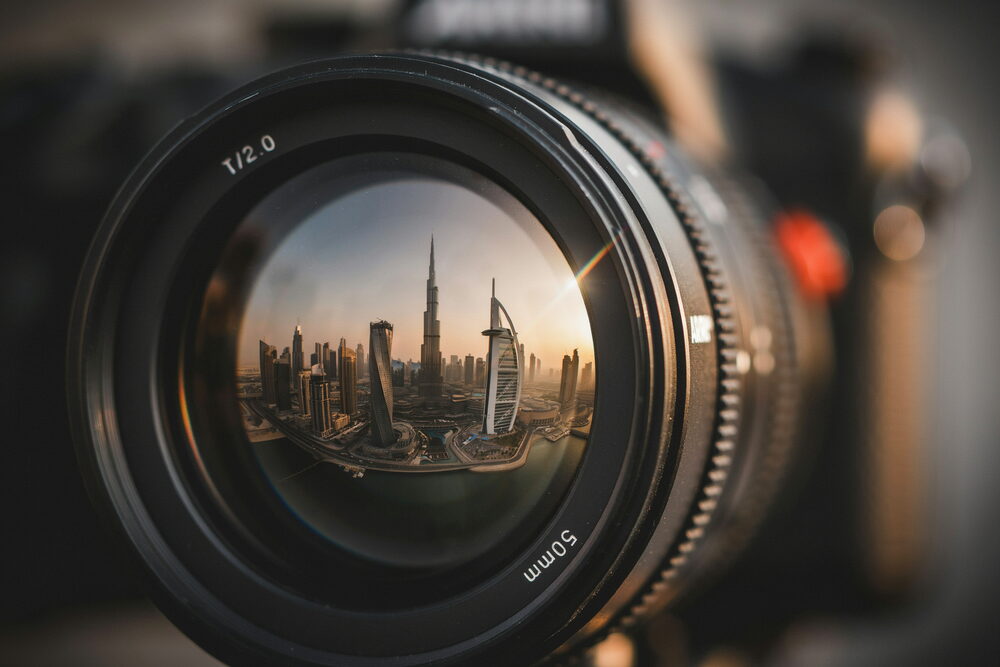
Why Filming in Dubai Demands a Different Standard
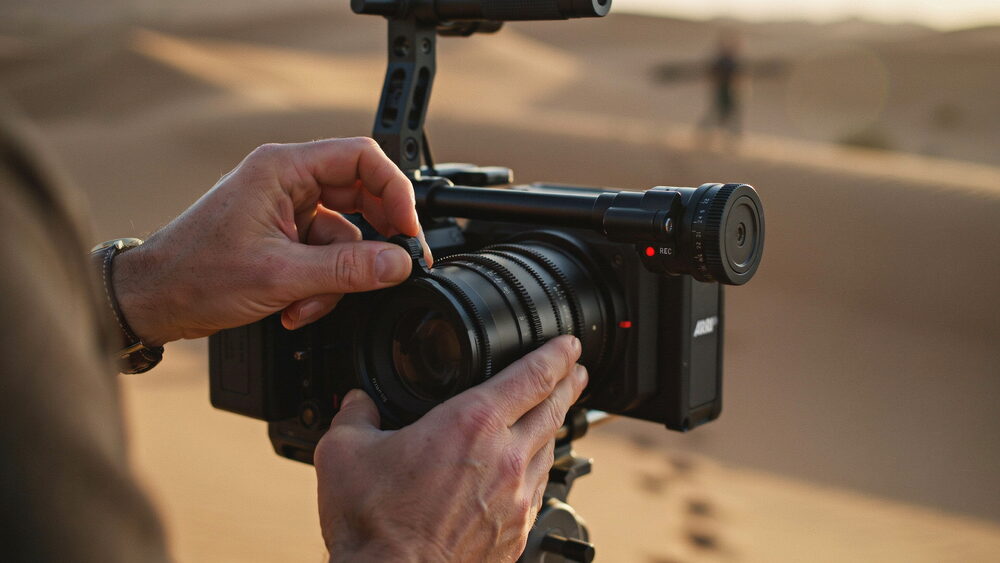
Filming in dubai is not like shooting anywhere else. The city gives you a skyline that reads as science fiction, desert light that shifts from gold to violet in under an hour, and interiors that already look like a finished luxury campaign. But that visual wealth comes with a catch: the standard is higher because the environment is louder. A mediocre frame stands out here the way a typo stands out in a headline.
Key takeaways
- Commercial shoots require a Dubai Film and TV Commission permit; fines for unpermitted work can reach AED 50,000.
- Luxury brand films typically cost AED 150,000 to AED 400,000, with permits, crew, and post-production as the main line items.
- November through March offers the most reliable outdoor conditions; summer heat limits exterior shooting windows.
- A local production house handles permits, crew, and equipment, which reduces delays and keeps the visual style consistent.
- Drone work needs a GCAA-approved operator and location clearance; much of the city sits in restricted airspace.
We see this constantly at DAO Marketing. A developer will send us a rough cut shot on a phone, and the Burj Khalifa will be in the background, slightly overexposed, with a crane swinging through the top right corner. The location is doing all the work, and the footage still fails. That is the core tension of filming in dubai: the city hands you iconic material, so any technical weakness becomes the story instead of the brand.
Luxury brands do not come here for a generic cityscape. They come for the specific visual language Dubai has built over two decades: the infinity-edge pools at Jumeirah, the marble lobbies of Downtown, the dune shadows at Al Qudra, the way Sheikh Zayed Road curves past the Museum of the Future at dusk. Cinematic filming in this context means controlling contrast, managing reflections off glass and water, and holding a color grade that feels expensive without looking artificial. It is about not letting the environment overpower the product.
That is why the pre-production conversation matters more here than in most markets. You are not just scouting locations. You are deciding which version of Dubai the brand wants to inhabit: the futuristic one, the heritage one, the resort one, or something quieter. Each choice changes the crew, the permits, the lighting package, and the edit. We have learned to treat that decision as a brand strategy question first and a logistics question second, because the wrong backdrop can make a five-star property look like a stock photo.
Dubai also compresses time. You can shoot a sunrise exterior, a midday interior, and a night skyline sequence in a single day if the schedule is built properly. That speed is a gift for production budgets, but it punishes crews who are not used to the heat, the humidity near the coast, and the way sand gets into everything. Filming in dubai rewards preparation and punishes improvisation. The brands that understand this arrive with a shot list, a weather plan, and a local partner who knows which locations will actually clear permits in time. The ones that do not end up with beautiful b-roll and no story.
Permits and Legal Requirements for Filming in Dubai
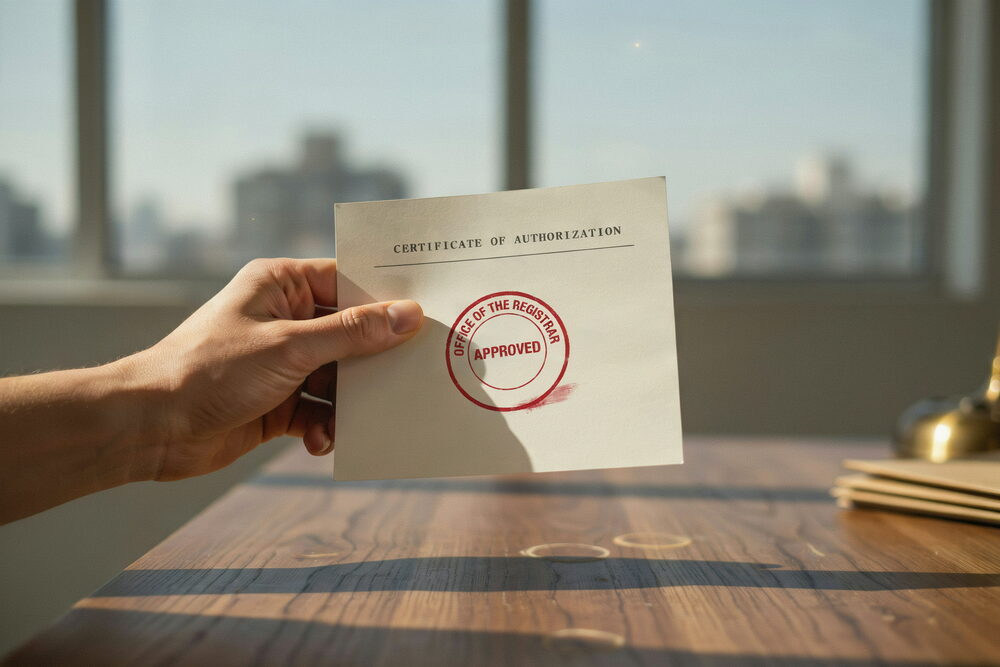
Filming in Dubai starts with the Dubai Film and TV Commission (DFTC), the single authority that issues location permits for commercial shoots. The process is straightforward if you prepare the right paperwork, but it rewards patience and precision. Most luxury brand productions apply for a standard commercial permit, which covers a defined location, crew size, and shooting window.
Costs vary by location and production scale. A basic commercial permit for a private property or studio typically starts around AED 1,500, while iconic public sites like Downtown Dubai or the Dubai Marina can run AED 5,000 to AED 15,000 per day. Drone work, road closures, and large crew counts push the fee higher. The DFTC also charges a refundable deposit, usually AED 2,000 to AED 5,000, returned after the shoot if no damage occurs.
Timelines depend on how early you apply. Standard permits take three to five working days. Shoots at high-demand government landmarks or during peak season can take two weeks or more. We always advise clients to lock the permit before booking flights or crew, because a rejected application resets the entire schedule. Required documents include a completed application form, a valid trade license for the production company, a storyboard or shot list, passport copies for key crew, and a letter of no objection from the location owner.
The distinction between commercial and personal filming matters more than most brands expect. Personal filming, such as a tourist capturing a vlog or a couple shooting a wedding video, generally does not require a DFTC permit in public areas. Commercial filming, which includes any content intended for advertising, brand promotion, or paid distribution, always requires a permit. A luxury brand shooting a campaign for social media is commercial, even if the crew is small. The DFTC enforces this strictly, and fines for unpermitted commercial shoots can reach AED 50,000. You can check the official Dubai Film and TV Commission website for current application forms and fee schedules.
| Permit Type | Typical Cost | Processing Time | Best For |
|---|---|---|---|
| Standard Commercial | AED 1,500, 5,000 | 3, 5 working days | Private villas, studios, offices |
| Public Landmark | AED 5,000, 15,000 | 5, 10 working days | Downtown, Marina, Old Dubai |
| Drone / Aerial | AED 3,000, 8,000 | 7, 14 working days | Skyline, coastline, golf courses |
| Road Closure | AED 10,000+ | 10, 20 working days | Car commercials, chase scenes |
For any luxury branded content film company dubai project, we handle the permit application end to end. That includes liaising with the DFTC, securing location approvals, and managing the deposit. It removes the single biggest source of delay in video production Dubai shoots, which is waiting on paperwork rather than waiting on weather.
Choosing the Right Locations for Luxury Brand Content
Location is the silent narrator of any luxury film. In Dubai, the backdrop does more than frame the product; it signals who the brand is for. A penthouse shoot at the Address Downtown says something different from a dune sequence in Al Qudra, and audiences read that difference in seconds. We treat location scouting as a brand exercise, not a logistical checkbox.
Downtown Dubai gives you the Burj Khalifa, the Dubai Mall promenade, and the choreographed fountains. It works for brands that want scale, spectacle, and global recognizability. Dubai Marina offers a different register: glass towers, yacht decks, and a more relaxed cosmopolitan rhythm. For developers, these two districts anchor most luxury real estate website development dubai campaigns because the visuals match the price point.
Desert dunes are the wildcard. Al Qudra and the Dubai Desert Conservation Reserve give you clean horizons and golden-hour light that no studio can replicate. But they come with wind, sand, and heat constraints, so a production house needs to plan for equipment protection and crew hydration. Private villas in Emirates Hills or Palm Jumeirah offer controlled luxury: infinity pools, marble interiors, and zero public interference. Luxury hotels like the Bulgari Resort or One&Only Royal Mirage bring architectural polish and service standards that keep talent comfortable between takes.
The right location also shapes post-production. A minimalist villa shoot edits differently from a busy marina sequence, and that affects color grading, pacing, and even the music brief. We always ask clients one question before scouting: what should the audience assume about your brand within the first three seconds? The answer usually narrows the location list from twenty options to three.
Assembling a Local Crew and Equipment
Local crews in Dubai understand the city's rhythm. They know which roads clog at 5pm, which parking bays a permit actually covers, and how to keep a shoot moving when the call to prayer shifts the soundscape. Hiring people who already work in this environment saves hours of trial and error, especially for luxury brand content where every minute of daylight matters.
Camera equipment is rarely the bottleneck. Dubai rental houses stock current cinema bodies, anamorphic lenses, and proper grip gear, but the real advantage comes from operators who know how to protect that kit in heat and dust. A local focus puller has already solved the problem of shooting on a 45-degree afternoon without the sensor overheating. That kind of practical knowledge doesn't show up in a gear list.
Lighting for luxury work leans hard on control. High-end property and lifestyle shoots often mix large diffusion frames with negative fill to keep interiors feeling airy without blowing out the view. Local gaffers know which buildings reflect harsh light at certain hours and can plan around it. Drone work adds another layer: operators must hold a GCAA-approved license, and many prime locations sit inside no-fly zones or require additional clearance. A crew that already navigates these rules prevents a grounded drone from killing the schedule.
This is where a luxury branded content film company dubai earns its fee. A production house manages the moving parts: crewing up, booking gear, securing drone permits, and keeping the whole day on track. We've seen too many shoots stall because a single permit wasn't chased or a lens wasn't reserved. Having one team accountable for those details is the difference between a smooth shoot and a costly reshoot.
Costs and Budgeting for a Dubai Shoot
Filming in Dubai costs more than most markets, but the premium buys speed, reliability, and access to locations that simply don't exist elsewhere. A standard corporate video might run AED 25,000 to AED 60,000, while a luxury brand film with cinematic filming, drone work, and a full art department easily reaches AED 150,000 to AED 400,000. The gap isn't just scale. It's the difference between a functional video and a piece of branded content that holds its own next to a fashion campaign.
Permits are the first line item. Dubai Film and TV Commission (DFTC) approval starts around AED 1,500 for a simple shoot, but locations like the Burj Khalifa, Dubai Opera, or a private beach villa carry their own fees, often AED 5,000 to AED 25,000 per day. Government-owned sites add processing time, so budget for a permit runner and a buffer of three to five working days.
Crew costs vary sharply by tier. A local videographer with a DSLR might charge AED 3,000 per day. A director of photography with a cinema camera, gaffer, grip, and first AC runs AED 15,000 to AED 30,000 daily. Luxury shoots usually need a stylist, art director, and a dedicated producer, which adds another AED 10,000 to AED 20,000 per day. Equipment rental from Dubai video studios is competitive: a RED or ARRI package with lenses costs AED 8,000 to AED 15,000 per day, while lighting and grip add AED 3,000 to AED 6,000.
| Budget Tier | Typical Range (AED) | What It Covers | Best For |
|---|---|---|---|
| Standard Commercial | 25,000 - 60,000 | 1-2 shoot days, basic crew, one location, minimal art direction | Product demos, internal videos, social clips |
| Premium Brand Film | 80,000 - 200,000 | 2-4 shoot days, full crew, stylist, multiple locations, drone, color grade | Property launches, hospitality campaigns, lookbooks |
| Luxury Cinematic | 250,000 - 500,000+ | 5+ shoot days, A-list director/DP, art department, talent, VFX, original score | Flagship campaigns, brand manifestos, global launches |
Luxury work also demands post-production that standard shoots skip. Color grading alone can cost AED 15,000 to AED 40,000 for a two-minute film, and sound design, licensed music, and motion graphics push the total higher. A production house in Dubai will usually quote these as a package, which is easier to manage than piecing together freelancers.
One cost people forget: location scouting and recce days. Driving between Palm Jumeirah, Alserkal Avenue, and the desert takes time, and each scouting trip burns half a day of producer time. Budget AED 2,000 to AED 5,000 for scouting, plus transport and meals for the crew, which run AED 150 to AED 300 per person per day.
We tell clients to set aside 10 to 15 percent of the total budget for contingencies. Weather shifts, permit delays, and talent no-shows happen. Filming in Dubai rewards those who plan for the unexpected rather than hoping it won't occur.
Working with a Production House vs. Freelancers
When you're filming in Dubai for a luxury brand, the first structural decision is whether to hire a full-service production house or assemble a team of freelancers. Both routes work, but they produce very different levels of control, consistency, and stress. A production house brings a single point of accountability: one contract, one project manager, one standard of quality across every frame. Freelancers give you flexibility and sometimes lower day rates, but you become the producer, the quality controller, and the fixer when something goes wrong.
Reliability is the biggest differentiator. A production house has redundant equipment, backup crew members, and established relationships with Dubai Film and TV Commission, location owners, and equipment rental houses. If a camera operator calls in sick the morning of a shoot, the house replaces them within hours. If you've hired a freelancer, you're making calls from the set while the sun moves. For luxury brand content, where a single missed golden-hour shot can delay the entire campaign, that reliability matters more than the line-item savings.
Quality control is the second reason we lean toward a production house model. When one team handles pre-production, filming, and post-production, the visual language stays coherent. Color grading, sound design, and motion graphics all follow the same creative direction. Freelancers, however talented, each bring their own habits and interpretations. You end up stitching together a patchwork that looks fine in isolation but inconsistent as a campaign. For a brand that has invested heavily in brand strategy dubai, that inconsistency is expensive to fix later.
Brand consistency is where the production house really earns its fee. At DAO Marketing, our filming projects always start with the brand's existing identity: typography, color palette, tone of voice, and the specific luxury cues that define the developer or lifestyle brand. A production house can enforce those rules across every shot because the director, DP, and editor all work from the same brand book. Freelancers rarely have access to that depth of context, and even when they do, they're not incentivized to enforce it the way an in-house creative director is.
The trade-off is real: a production house costs more upfront. But the hidden costs of freelancers add up fast. You'll spend more time on briefings, more time reviewing inconsistent work, and more money on reshoots. For a single social clip, a freelancer might be perfect. For a multi-day shoot across three locations with a 20-person crew, a production house is usually the safer bet. We've seen both models work in Dubai, but the brands that scale their content consistently are the ones that treat filming as a strategic investment, not a series of one-off gigs.
Post-Production and Brand Alignment
Editing is where a luxury shoot becomes a brand asset. We cut for rhythm first, then for restraint. A 60-second property film for a Palm Jumeirah villa doesn't need jump cuts. It needs long, deliberate holds that let the architecture breathe. We remove anything that feels rushed or generic, and we keep the takes where the light does something honest.
Color grading carries most of the emotional weight. For a desert resort, we often pull the highlights toward warm sand tones and keep the shadows cool, which gives depth without looking filtered. For a glass-and-marble tower, we lean into clean whites and subtle blue reflections. The grade has to match the brand's existing palette, not just the location. That's why we reference the dubai brand identity guidelines before we touch the color wheels. If the brand uses muted golds and deep charcoal in print, the film should feel like the same world.
Sound design is the quiet differentiator. A luxury film rarely needs a loud score. We layer room tone, the click of a door latch, the soft rustle of fabric, and a restrained music bed that sits under the voice rather than over it. Bad audio can make a million-dirham villa feel cheap. Good audio makes a handbag close feel expensive.
We also build in versioning. One master cut for the website hero, a 15-second vertical for Instagram, a 30-second cut for YouTube pre-roll. Each version keeps the same grade and the same sonic signature, so the brand feels consistent across every screen. That consistency is what separates a one-off video from a campaign that compounds.
Common Mistakes to Avoid When Filming in Dubai
Most production problems in Dubai trace back to a handful of avoidable errors. We see them on shoots where teams rush the planning phase or assume rules from other markets still apply. The heat is the first one that catches people. Between June and September, outdoor filming in Dubai means surface temperatures above 45°C, and that changes everything from battery life to makeup durability. Schedule exteriors for the first two hours after sunrise, keep a shaded rest area with chilled water on standby, and rotate crew more often than you would in a temperate climate. Ignoring this costs you usable footage and risks heat exhaustion.
Permit mistakes are just as common. Some crews treat a location permit as optional for a quick b-roll pickup, then lose half a day when security shuts them down. Dubai Film and TV Commission requires permits for most public spaces, and private venues like hotels or malls have their own approval chains. Confirm written permission before any gear leaves the van. Drone planning deserves the same respect. Restricted airspace covers much of the city, especially near airports and government buildings. A licensed operator with a No Objection Certificate is not a nice-to-have; it is the difference between a smooth aerial shot and a confiscated drone.
Poor location scouting shows up as wasted hours and generic footage. A rooftop that looks perfect on Instagram may have construction noise, wind issues, or a glass facade that turns golden hour into a glare problem. Visit at the same time of day you plan to shoot. And do not underestimate the value of controlled environments. Many luxury brands pair exterior hero shots with interiors at dedicated video studios, where lighting, acoustics, and climate are predictable. That hybrid approach saves budget and protects the schedule.
How DAO Marketing Approaches Luxury Filming Projects
We treat filming in dubai as a brand exercise first and a production exercise second. Before a single camera is booked, our team sits down with the client to map the story the film needs to tell. That conversation often starts with the same question we raised at the top of this guide: what does this project need to make a viewer feel, and how does that feeling connect to the brand's long-term position? For a property developer, that might mean a slow aerial reveal of a waterfront tower at golden hour. For a lifestyle label, it could be a 30-second cut built around a single texture, a silk scarf moving in the wind. The strategy shapes every choice after it.
From there we move into location scouting and permitting, drawing on our local network to secure access to spaces that fit the brief without burning the schedule. We handle the paperwork, the crew calls, the equipment lists, and the contingency plans. Our brand strategy consulting dubai work means the shoot itself is never a scramble; it is a controlled, repeatable process with clear sign-offs at each stage. We also keep a close eye on the edit, because a luxury film lives or dies in the pacing and the color grade, not just the footage.
What we deliver is a piece of content built to sit alongside a brand's identity, its website, and its campaign assets. And because we operate as one team across strategy, production, and performance media, the film does not end at delivery. We track how it performs, where it drives engagement, and what to adjust for the next shoot. That loop is what turns a single filming project into a long-term asset.
Frequently Asked Questions
How much does a filming permit cost in Dubai?
Permit fees vary by location and project scale. Public areas managed by Dubai Film and TV Commission often start around AED 1,000 to AED 5,000, while private venues like hotels or malls set their own rates. Always confirm current pricing with the specific authority before locking your shoot date.
What is the best time of year for filming in Dubai?
November through March offers the most comfortable conditions, with daytime temperatures between 24°C and 30°C and softer light for exterior shots. Summer months from June to September regularly exceed 40°C, which limits outdoor shooting windows and strains both crew and equipment.
Are drones allowed for filming in Dubai?
Yes, but only with a permit from the Dubai Civil Aviation Authority. Commercial operators must hold a valid drone license and register each flight. Restricted zones include airports, government buildings, and many residential areas. Working with a licensed local operator is the fastest way to stay compliant.
Do I need a local sponsor or production house to film in Dubai?
Foreign production companies typically need a local partner to handle permits, visas, and customs clearance for equipment. A Dubai-based production house can act as that sponsor while also sourcing crew, locations, and transport. This is standard practice for international luxury brand shoots.
Can I hire a local crew for a Dubai shoot?
Yes, Dubai has a deep pool of experienced directors, cinematographers, gaffers, and sound recordists who work regularly on high-end commercial and property content. Hiring locally reduces travel costs and gives you a team that already knows the permitting process and the best filming locations.