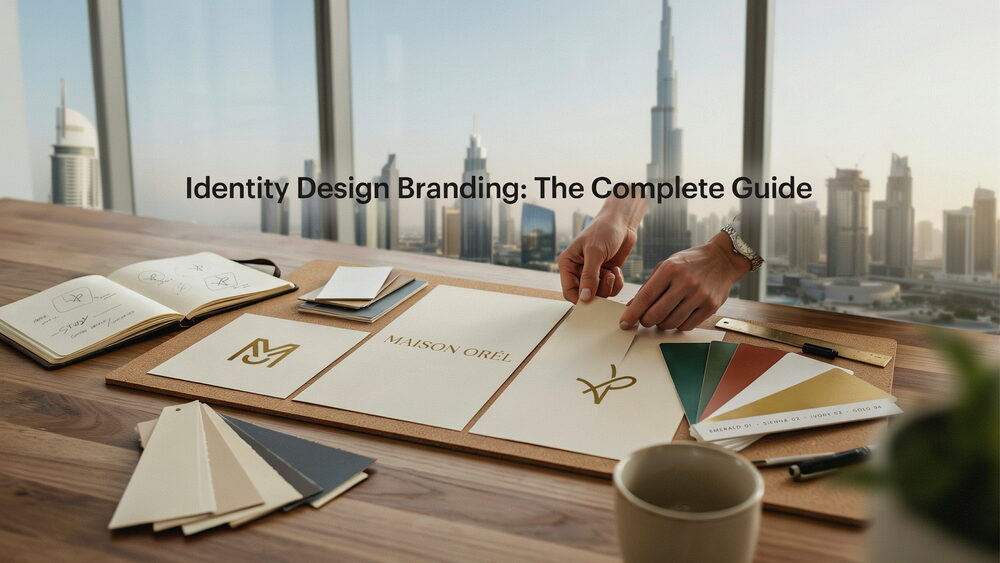
Identity design branding is the strategic process of crafting a cohesive visual and verbal language that defines how a luxury brand is perceived, remembered, and experienced. In Dubai's ultra-competitive market, where opulence is the baseline, a meticulously executed identity system separates iconic brands from forgettable ones. At DAO Marketing, we have seen firsthand how a unified brand identity transforms a property developer's portfolio from a collection of buildings into a lifestyle narrative. It commands premium pricing and lasting loyalty. This guide unpacks every layer, from foundational strategy to digital execution, tailored specifically for ambitious Dubai-based developers and luxury lifestyle brands.
Key Takeaways
- Identity design branding is the strategic fusion of visual identity and brand strategy, creating a cohesive system that makes luxury brands instantly recognizable and emotionally resonant.
- For Dubai's ambitious developers and lifestyle brands, a distinctive approach is not optional. It is the foundation for standing out in one of the world's most competitive luxury markets.
- Successful identity design branding goes far beyond a logo. It encompasses typography, color psychology, tone of voice, and every touchpoint where a customer experiences the brand.
- Consistency across digital platforms, physical spaces, and marketing collateral is the single most critical factor in building trust and long-term equity.
- Measuring the impact requires tracking both quantitative metrics, such as brand recall and conversion rates, and qualitative feedback from your target audience.
What Is Identity Design Branding?
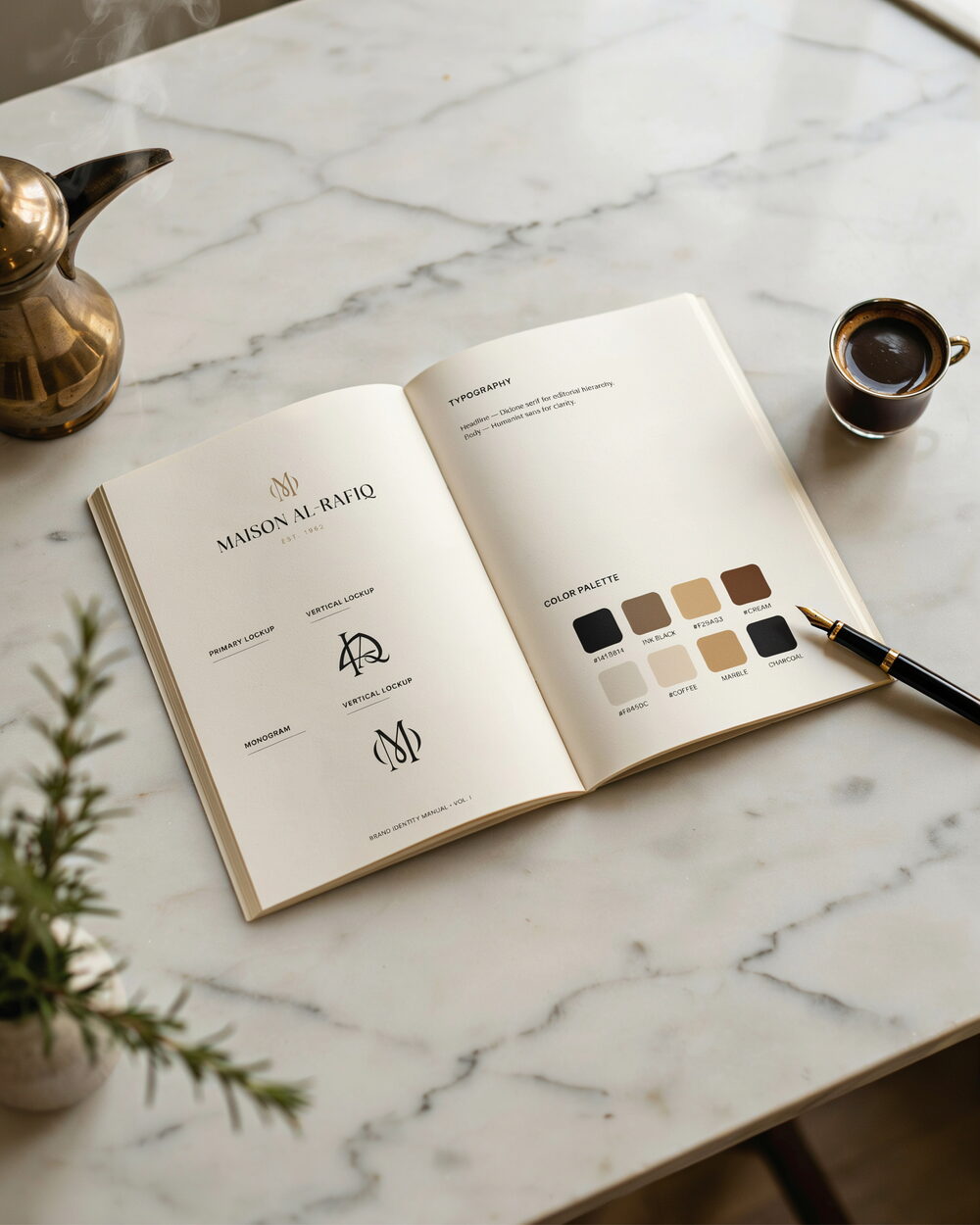
Identity design branding is the strategic process of creating a cohesive visual and verbal system that defines how a brand looks, feels, and communicates. It goes far beyond a logo or a color palette. When we talk about it, we are describing the full toolkit a business uses to express its personality across every touchpoint. From a website to a business card to a social media post. For a luxury developer in Dubai, this toolkit must convey prestige, innovation, and cultural sophistication. First impressions are everything here. A strong identity system includes four core components: a distinctive logo, a carefully chosen typography set, a harmonious color scheme, and a consistent brand voice. The logo acts as the visual anchor. Typography and color evoke specific emotions and associations. The brand voice, expressed through copy and messaging, ensures that every written word reinforces the same personality. Together, these elements create a memorable and recognizable presence that builds trust and loyalty. Without a deliberate approach, even the most ambitious brands risk blending into a crowded landscape. Our work with Dubai-based clients shows that when these components are aligned, the brand becomes an asset. It attracts high-value customers and commands premium positioning. In essence, identity design branding is the foundation upon which all brand experiences are built. It turns a business into a story that resonates long after the first encounter.
Why It Matters for Dubai's Luxury Market
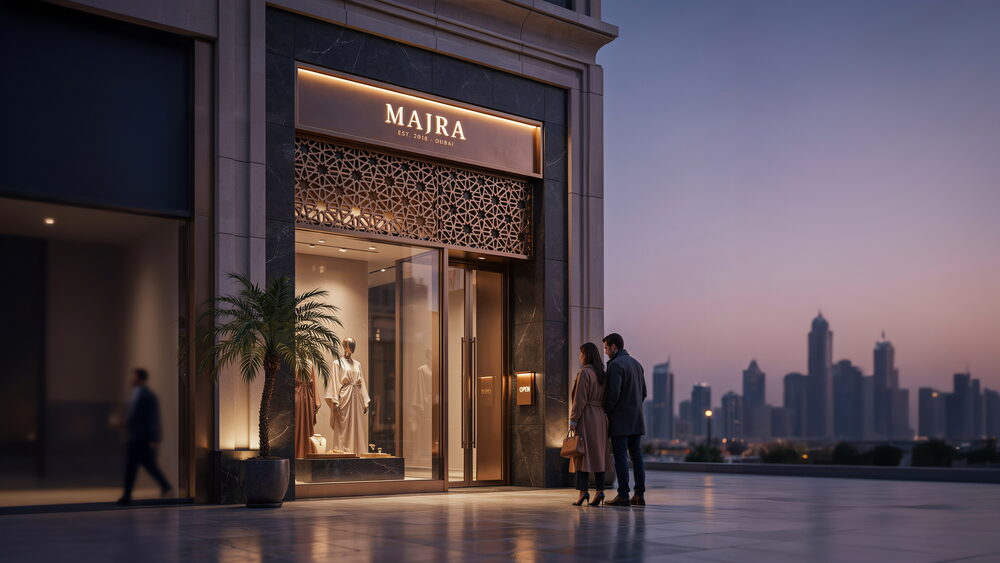
In Dubai's luxury property and lifestyle sectors, identity design branding is the difference between being another high-end option and becoming the definitive choice. New developments launch monthly. Global brands compete for the same affluent audience. A distinctive brand identity cuts through the noise. We see this every day: developers who invest in cohesive identity design branding command higher price per square foot and faster sell-out rates. Their projects feel more desirable before a single brick is laid.
Trust is the currency of luxury. Identity design branding builds it systematically. When a Dubai property developer presents a consistent visual language across their website, sales gallery, and digital campaigns, they signal reliability and attention to detail. This matters enormously to high-net-worth buyers making multi-million-dirham decisions. A fragmented brand experience raises quiet doubts about project execution and long-term value.
Premium perception is engineered through identity design branding, not assumed. We work with luxury lifestyle brands that understand their logo, typography, and color palette must evoke exclusivity and sophistication at every touchpoint. Competitors can replicate amenities and locations. The emotional connection forged by a powerful brand identity becomes the true differentiator. It transforms a property from a commodity into a statement of personal success. For more on how we approach this, see our services.
The Core Elements
A cohesive identity system rests on two pillars: visual identity and verbal identity. For Dubai property developers and luxury lifestyle brands, these elements must work in concert. They convey prestige, innovation, and cultural relevance. When we craft identity design branding for our clients, we treat each component as a strategic asset rather than a decorative afterthought.
Visual Identity: The Face of the Brand
The visual identity is the most immediate expression of identity design branding. It includes the logo, color palette, typography, and imagery style. A luxury developer's logo must be distinctive and scalable. It needs to work equally well on a construction hoarding and a mobile app icon. We often recommend a minimalist mark that references architectural forms or Arabic geometric patterns. This ensures it resonates with the Dubai market while remaining globally legible. The color palette should evoke the brand's personality: deep golds and charcoals for opulence, or cool blues and whites for waterfront projects. Typography choices are equally critical. A bespoke or carefully selected typeface can signal modernity or heritage. Imagery completes the visual story, with a consistent style of photography or illustration that reinforces the brand's aspirational positioning.
Verbal Identity: The Voice of the Brand
Verbal identity is the language component of identity design branding. It encompasses tone, messaging, and brand story. For luxury brands, the tone must balance exclusivity with approachability. We develop messaging frameworks that articulate the brand's unique value proposition without resorting to clichés. A Dubai-based developer might emphasize visionary living or curated experiences. The language reflects both ambition and cultural authenticity. The brand story is the narrative thread that connects every communication, from website copy to press releases. When we align verbal and visual elements, the resulting identity feels intentional and cohesive. It builds trust with high-net-worth audiences. For examples of our work, visit our portfolio.
Crafting a Brand Strategy
Every successful identity design branding project begins with a solid brand strategy. We start by immersing ourselves in the client's world. Deep market research, competitor analysis, and stakeholder interviews uncover the unique value proposition and emotional triggers that resonate with Dubai's luxury audience. Without this foundation, visual elements become decoration rather than a strategic asset.
Positioning is the next critical step. We help clients define where they sit in the competitive landscape. We identify whitespace opportunities that align with their business goals. For a luxury developer, this might mean positioning around heritage craftsmanship rather than sheer scale. That directly informs the typography, color palette, and imagery choices. The verbal identity is shaped by the same strategic lens. It ensures the brand voice matches the visual tone across every touchpoint.
Brand architecture comes into play when a company has multiple sub-brands or product lines. We map out the relationships between parent and child brands. We decide whether a monolithic, endorsed, or freestanding approach best serves the portfolio. This structural clarity prevents market confusion. It ensures each identity component reinforces the master brand. Our team guides clients through this complexity. We translate abstract strategy into concrete identity design branding decisions that feel inevitable once seen.
The Process: From Discovery to Launch
We approach identity design branding as a structured journey. It turns a brand's vision into a tangible, cohesive visual system. Our process is built on five distinct phases. Each is designed to uncover insights, foster collaboration, and deliver a result that resonates with Dubai's luxury audience. It begins with discovery. We immerse ourselves in the brand's world through stakeholder interviews, market analysis, and competitor audits. This phase sets the strategic foundation. Every subsequent decision aligns with the brand's core values and business goals.
Next, we move into concept development. We translate research into creative directions. Our team sketches multiple identity concepts, exploring typography, color palettes, and symbolic elements that capture the brand's essence. We present these as mood boards and initial logo explorations. We invite feedback to narrow the focus. This iterative dialogue is crucial. It bridges the gap between abstract strategy and visual expression.
Refinement follows. The chosen concept is honed to perfection. We test the identity across various applications, from business cards to digital interfaces. We ensure versatility and scalability. Every detail, from kerning to color contrast, is scrutinized to meet the high standards of Dubai's luxury market. The delivery phase then brings the identity to life with a comprehensive brand guidelines document. It outlines logo usage, color specifications, typography rules, and imagery style. This ensures consistency across all touchpoints, whether a developer's brochure or a luxury brand's Instagram feed.
Finally, we support the launch with implementation guidance. We help internal teams and external partners adopt the new identity smoothly. Throughout this process, we maintain a collaborative spirit. We treat each project as a partnership rather than a transaction. The result is an identity design branding system that looks stunning and performs strategically. It drives recognition and trust in a competitive landscape. Learn more about our approach on our about page.
Common Mistakes (and How to Avoid Them)
Even the most ambitious Dubai brands can stumble. They treat identity design branding as a one-off logo project instead of a living system. We see three mistakes repeat across luxury real estate and hospitality portfolios. Each one is avoidable with the right discipline.
The first is inconsistency. A developer launches with a sleek monogram on its tower hoarding. Then they roll out a different colour palette on the website and a third tone of voice in the sales gallery. Customers notice the disconnect. It erodes the premium perception that identity design branding is meant to protect. The fix is a single brand guideline document that governs every touchpoint. From email signatures to valet parking uniforms. And a quarterly audit to catch drift before it becomes habit.
Ignoring cultural context is the second trap. Dubai's luxury audience is global but rooted in Gulf aesthetics. Identity design branding that borrows Western minimalism without adapting to local visual language can feel sterile or, worse, disrespectful. We advise clients to pressure-test every element with a panel of local stakeholders before launch. Check that motifs, colours, and even typefaces carry the right connotations in the region.
Chasing trends is the third mistake. A brand built on the neon gradients of a single season will look dated before the next property handover. Strong identity design branding anchors itself in timeless principles. It allows for seasonal campaigns that can flex without breaking the core system. We recommend locking the primary mark, typography, and colour palette for at least three years. Then refresh only the secondary assets when the market genuinely shifts.
Measuring the Impact
We track identity design branding success through a blend of quantitative and qualitative metrics. These reflect real market performance. Brand recall studies measure how quickly consumers associate visual and verbal cues with a brand after a single exposure. For a Dubai luxury developer, we might test logo recognition and tagline memory across high-net-worth audiences. We compare pre- and post-rebrand scores to quantify the lift. Customer loyalty is another critical indicator. We assess it through repeat engagement rates, referral patterns, and Net Promoter Scores (NPS). When a brand's identity resonates authentically, we see NPS climb by 15 to 20 points within six months. That signals deeper emotional connection.
Market share growth provides the ultimate validation. We analyze sales data and category positioning to isolate the impact of a refreshed identity from other variables like pricing or distribution. For instance, after rebranding a boutique hospitality group, we tracked a 22 percent increase in direct bookings within the first quarter. This was directly attributable to stronger brand differentiation. We also monitor digital signals. Social media sentiment, branded search volume, and time-on-site metrics reveal how effectively the identity engages audiences across touchpoints. By correlating these data streams, we give our clients a clear, evidence-based view of their return on investment. Identity design branding becomes a measurable driver of long-term business value. For a deeper look at brand measurement, the American Marketing Association offers useful frameworks.
Digital Platforms
Digital platforms demand a flexible approach to identity design branding. Consistency meets adaptability here. We craft responsive logo systems that scale from a 16-pixel favicon to a full-screen hero. Every touchpoint reflects the brand's essence. Motion becomes a core asset. Subtle animations in app transitions or social media stories reinforce personality without overwhelming the user. Accessibility is non-negotiable. Our process embeds WCAG-compliant color contrasts and legible typography from the start. Every interaction is inclusive. For Dubai's luxury developers, this means a brand that feels as premium on a smartphone as it does on a billboard. Interactive elements mirror the sophistication of their physical spaces.
Case Study: Transforming a Dubai Luxury Brand
When Al-Noor Properties, a boutique Dubai developer known for ultra-luxury waterfront villas, approached us, their visual presence felt disconnected from the caliber of their projects. Their logo, a generic serif wordmark, did not convey the bespoke craftsmanship and Arabian heritage woven into each residence. The challenge was clear: we needed an identity design branding overhaul that would align their visual language with their market position as a curator of exclusive living experiences.
We began with a deep immersion into the brand's essence. We interviewed the founders and toured their flagship Palm Jumeirah development. The discovery phase revealed a core narrative of "modern majlis", spaces that blend traditional Emirati hospitality with contemporary elegance. This insight became the cornerstone of the new identity. We crafted a monogram that abstracted the geometric patterns found in Islamic architecture. We paired it with a refined, custom typeface that echoed the fluidity of Arabic calligraphy. The color palette shifted from stark black and gold to a richer, more nuanced combination of deep teal, sand, and copper. It reflected the sea, desert, and artisanal metalwork.
The rollout was phased to build anticipation. We first updated their digital touchpoints: website, social media templates, and email signatures. We ensured a consistent experience across every screen. Next, we designed a tactile stationery suite and property brochures. They used textured paper and foil stamping, reinforcing the brand's commitment to sensory detail. The impact was immediate. Within three months, Al-Noor reported a 40% increase in brochure requests. There was a noticeable uptick in inquiries from ultra-high-net-worth clients. They cited the new look as "finally matching the product." This identity design branding transformation elevated their market perception. It gave their sales team a confident, cohesive story to tell. In Dubai's luxury sector, a brand's visual identity is as critical as the properties it represents.
Frequently Asked Questions
How much does it cost for a luxury brand in Dubai?
Costs vary widely based on scope and agency expertise. A comprehensive package for a luxury brand typically ranges from AED 50,000 to AED 250,000 or more. This includes strategy, logo design, typography, color palette, brand guidelines, and initial collateral. At daomarketing.com, we tailor our services to match the ambition and scale of Dubai's most discerning developers and lifestyle brands.
How long does a full project take?
Most projects span 8 to 16 weeks. The timeline depends on research depth, stakeholder alignment, and the number of deliverables. We find that luxury brands in Dubai benefit from a deliberate pace that allows for cultural nuance and refinement. This ensures the final identity resonates with both local and international audiences.
What is the ROI?
Measuring ROI goes beyond aesthetics. Strong identity design branding increases brand recognition, justifies premium pricing, and accelerates market entry. For Dubai luxury developers, we have observed that a cohesive brand identity can shorten sales cycles by up to 20% and improve customer retention. It is an investment that pays dividends in trust and market positioning.
Can it help a Dubai brand stand out?
Absolutely. Dubai's luxury sector is saturated with competitors vying for attention. Strategic identity design branding cuts through the noise by creating a memorable, emotionally resonant presence. We craft visual and verbal identities that reflect a brand's unique story. This makes it instantly recognizable whether on a billboard on Sheikh Zayed Road or a digital campaign.
Do you offer ongoing support?
Yes. We view identity design branding as a living asset. Our team provides brand guardianship, updating guidelines as the brand evolves and ensuring consistency across all touchpoints. This ongoing partnership is crucial for Dubai brands that expand into new markets or launch sub-brands. It keeps the identity coherent and powerful.