
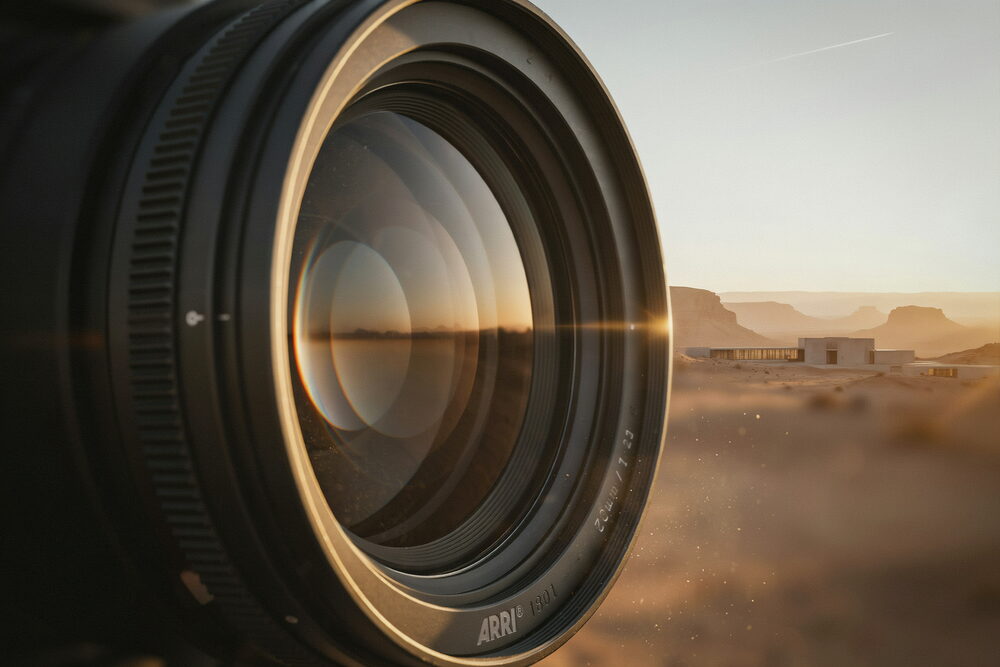
Film production for a luxury brand is not the same job as making a corporate explainer or a quick social clip. A handbag, a penthouse, a private resort: these products live or die on how they feel, and the only way to transmit that feeling through a screen is to treat every frame as a design decision. At DAO Marketing, we work with Dubai property developers and lifestyle brands who understand that a film is not a cost line. It is the first physical impression a buyer gets before they ever walk through a door.
The stakes are higher than they look. A poorly lit shot of a marble lobby can make a AED 40 million apartment read as generic. A well-shot sequence, by contrast, lets the viewer feel the weight of the stone, the temperature of the light, the silence of the space. That is the gap between video and cinema, and it is the gap luxury brands cannot afford to ignore.
Key Takeaways
- Film production is a brand investment, not a line-item cost. A single cinematic film can reposition how buyers and partners perceive a development or lifestyle brand for years.
- Dubai gives luxury film production a practical edge: controlled light, dramatic architecture, and a permitting environment built for ambitious shoots.
- Pre-production discipline separates premium work from average work. The best films are won in location scouting, shot lists, and casting decisions made weeks before the camera rolls.
- Post-production is where luxury becomes visible. Color grading, sound design, and edit pacing do more for perceived value than any single piece of gear.
- Choosing the right production house matters more than choosing the right camera. A team that understands brand restraint will outperform a technically brilliant crew that doesn't.
What Makes Film Production 'Luxury'?
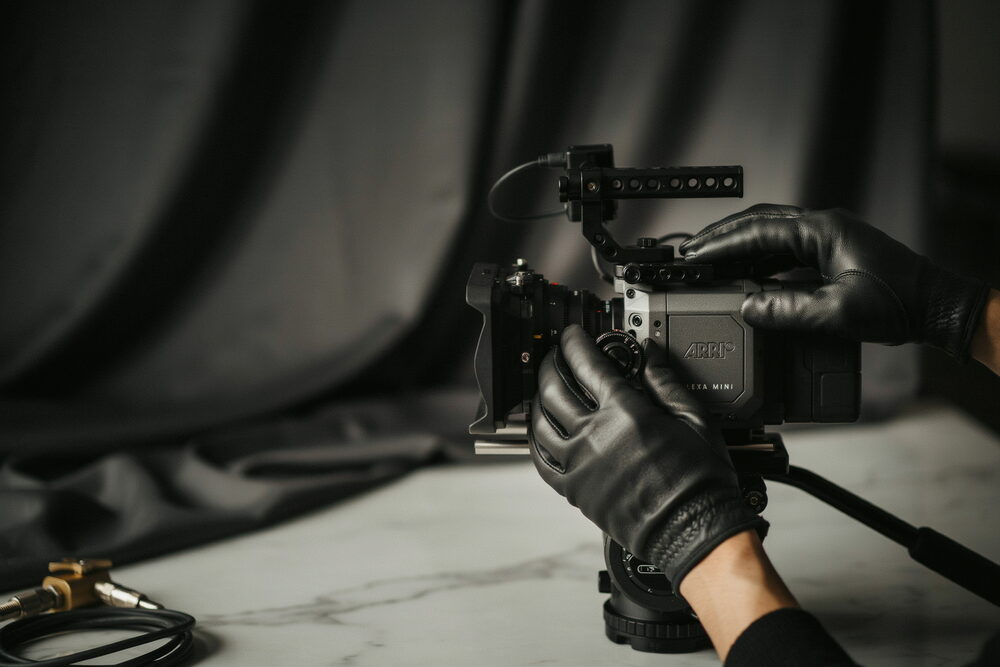
Commercial video tells you what a product is. Cinematic film production makes you feel what it would be like to own it. The difference isn't budget alone, though budget helps. It's a set of craft decisions that most viewers register without ever naming them.
Lighting is the first signal. Mass-market video lights for clarity, flattening the frame so every detail reads at a glance. Luxury film production lights for mood, letting shadows fall where they should, shaping a room or a face so the eye moves through the image the way a director intends. Art direction follows the same logic. A production house working at this level doesn't just find a nice location; it dresses the space, controls the palette, and removes anything that distracts from the story.
Sound design separates cinematic film from ordinary footage faster than any visual cue. A room-tone bed, a tailored score, the specific click of a door latch, these details tell the brain this is a world worth entering. Pacing works the same way. Luxury edits hold a shot a beat longer than feels comfortable in a social ad, because restraint reads as confidence.
Color grading is where the whole thing coheres. The same footage can look like a phone clip or a feature film depending on how the grade treats skin tones, highlights, and contrast. At DAO Marketing we grade for continuity across every scene, so a villa tour, a brand film, and a launch teaser feel like one body of work rather than three separate projects.
The Dubai Advantage for Film Production
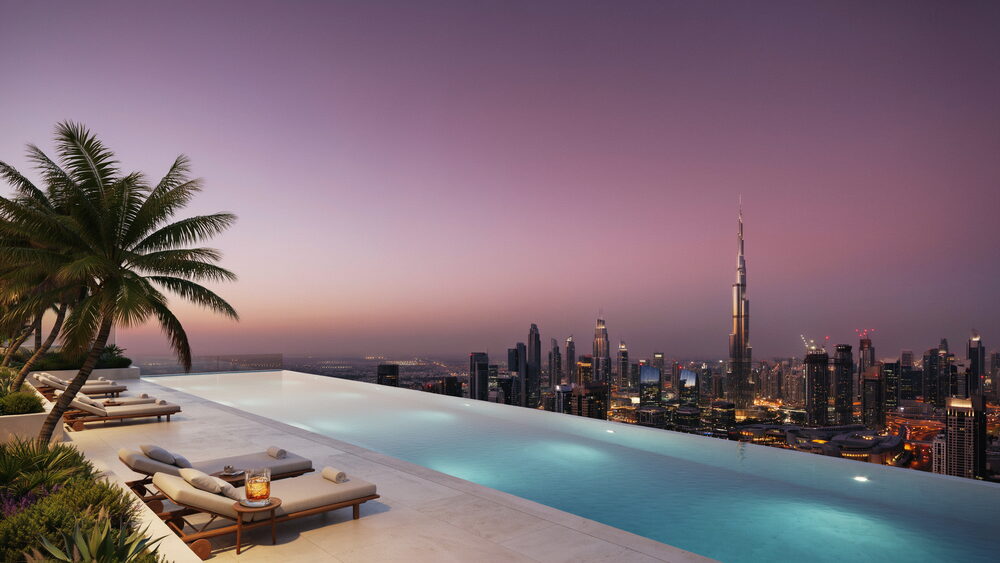
Dubai has quietly become one of the world's most reliable places to shoot luxury film production, and the reasons are practical rather than romantic. The city offers a rare combination of architectural variety, predictable light, and a crew base that has handled everything from superyacht launches to private aviation campaigns. When a brand needs a controlled environment with minimal weather risk, filming in Dubai removes a variable that derails shoots elsewhere.
Light matters more than most clients expect. Dubai gets roughly 350 days of sunshine a year, which means a production schedule can hold without rain days eating the budget. Golden hour here is consistent, and the low humidity in winter months keeps lenses clear and talent comfortable. A director of photography can plan a three-day exterior shoot with confidence, something that is harder to guarantee in London, New York, or even Los Angeles.
The location range is another quiet advantage. Within a 45-minute drive you can move from a minimalist concrete villa in Al Barari to a marble lobby in DIFC, then out to the desert for a wide shot that reads as Mars or Morocco depending on the grade. This density of backdrops means a production house can shoot multiple setups in a single day without the logistical drag of long company moves.
Crew depth has caught up with demand. Dubai now has a stable pool of focus pullers, gaffers, art directors, and drone pilots who work on international campaigns year-round, and the city's free-zone structure makes it straightforward to bring in a specialist from Europe when a project needs one. The concentration of high-end clients also means suppliers understand the standard: camera houses stock the latest large-format bodies, and location managers know which rooftops will clear a drone permit in an afternoon.
For a brand that sells to buyers in Riyadh, Geneva, and Singapore, shooting in Dubai also sends a quiet signal about reach and operational maturity. It is not the cheapest market, but it is one of the most predictable, and predictability is what protects a six-figure production budget.
Choosing the Right Production House
Most luxury brands don't fail because of a weak concept. They fail because they picked a production house that couldn't deliver at the level the brief demanded. The gap between a good reel and a finished film that matches it is where budgets disappear and relationships sour.
We look for four things before we recommend anyone, including ourselves. First, senior creative leadership that stays on the project from treatment to final grade. If the director who pitched the work hands it to a junior team after the contract is signed, the taste level drops. Second, a reel that matches your brand's aesthetic, not just the category. A production house that shoots fast-paced automotive spots won't automatically nail the slower, more considered pacing of a private residence film. Third, transparent budgeting with line items you can actually question. Vague lump sums hide markups and force you to negotiate blind. Fourth, in-house post-production. When editing, color, and sound live under the same roof, the film keeps its intention through every pass instead of being handed between vendors who never saw the set.
Ask to see a full case study, not just a highlight reel. A single beautiful film can be luck. Three films for three different clients with consistent craft is a track record. And check who actually owns the relationship. The best production houses treat your brand as a long-term account, not a one-off invoice.
Pre-Production: Where the Film Is Actually Made
Most people think the magic happens on set. It doesn't. The film is actually made in pre-production, weeks before anyone picks up a camera. This is where we turn a vague idea into a shootable plan, and it's the phase that separates a polished luxury film from something that looks like a rushed corporate video.
We start with a creative brief that pins down the brand's voice, the audience, and the single emotion the film should leave behind. From there we write a treatment, a short narrative document that describes the story, pacing, and visual tone. It's not a script yet. It's the argument for why this film deserves to exist. Once the client signs off, we move to a storyboard, sketching every key shot so the director, DP, and client all see the same film before it's shot.
Location scouting follows. For production house work in Dubai, that might mean a penthouse at the Address Beach Resort, a private villa on the Palm, or a desert dune at golden hour. We check light angles, power access, parking, and noise. A beautiful location that can't hold a 20-person crew for six hours is useless.
Casting and wardrobe come next. Even a property film needs the right faces, and luxury casting is subtle: someone who looks like they belong in a five-star lobby, not a model who's never held a coffee cup naturally. Wardrobe is chosen to complement the palette of the interiors, never to fight it.
Finally, we build a shooting schedule that respects the light. Exterior shots get the first and last hours of the day. Interiors fill the harsh midday window. Every scene gets a timecode, every department gets a call sheet, and every contingency gets a backup plan.
Skip any of this and you'll pay for it on set, where every hour costs real money. Do it properly and the shoot becomes almost boring, which is exactly what you want.
Production Days: What Happens on Set
A luxury brand shoot day starts early, usually before sunrise in Dubai when the light is soft and the streets are quiet. The crew arrives first: the gaffer rigs lights, the camera team builds the rig, and the art department dresses the space. By the time the client walks in, the set already looks like a film.
The director's job is to protect the vision. They watch the monitor, adjust framing, and decide when a take is good enough to move on. A typical day allows for six to eight setups, each one a new angle, a new lens, or a new location. That pace sounds slow, but it is what separates a cinematic film from a rushed corporate video.
On set, the client should stay close. Not hovering over the monitor, but available for quick decisions: does this wardrobe read too casual? Is the product placement correct? A good production house briefs the client the night before so those questions are already answered. Micromanaging the camera department, on the other hand, slows everything down and burns daylight.
Sound is the quiet hero. A dedicated sound recordist captures room tone, dialogue, and the small ambient details that make a film feel expensive. Skipping this step is the fastest way to end up with footage that looks premium but sounds cheap.
By wrap, the crew has shot roughly two to three minutes of final film. That may not sound like much, but in luxury film production, every second is intentional.
Post-Production: The Invisible Craft
Raw footage rarely looks like a cinematic film. Post-production is where the real transformation happens. Editors cut hours of material into a tight narrative, colorists build the mood through grading, and sound designers layer dialogue, ambience, and music into a seamless whole. For luxury brands, this stage is non-negotiable. A property walkthrough shot on a bright afternoon can feel cold and flat until a colorist warms the highlights and deepens the shadows. That shift is what separates a functional video from a piece of film production that feels intentional.
Color grading carries most of the emotional weight. Dubai sunlight is harsh and consistent, which gives footage a clean, clinical look straight out of camera. A skilled grader can push it toward golden-hour warmth or a cooler, more editorial palette depending on the brand's identity. Sound matters just as much. Footage with uneven room tone or wind noise reads as amateur even when the visuals are strong. We spend as much time on audio cleanup and music selection as we do on the edit itself, because viewers forgive a slightly soft frame far more easily than they forgive bad sound.
Finishing touches include motion graphics, title cards, and format delivery. A luxury brand needs versions for cinema screens, social feeds, and in-person presentations, each with different aspect ratios and loudness standards. That delivery work is part of the craft too. It is the reason we treat luxury brand video production studio work as a full pipeline rather than a shoot-and-handoff job. The edit, the grade, and the mix all have to serve the same idea, or the film falls apart.
Video Production Services for Property Developers
Property moves on emotion, and film production is the only medium that lets a buyer feel the weight of a marble lobby, the hush of a private garden, or the way light falls across a penthouse at dusk. Still photography flattens space. A well-shot film gives it dimension, pace, and a point of view. That's why the most ambitious developers in Dubai now treat luxury brand video production studio work as a core line item, not an afterthought.
Drone cinematography has changed what a property film can do. A slow aerial pass over a waterfront plot tells the buyer where the building sits in the city, how close the marina is, what the view actually looks like from the 40th floor. Ground-level shots then pull the viewer inside. The sequence matters: skyline first, then arrival, then interior. That order mirrors how a buyer experiences the property in person, and it's the structure we default to unless the brief demands otherwise.
Property films also need a different narrative arc than brand films. A fashion film can be abstract. A property film cannot. The buyer is making a decision, so the film must answer practical questions: what's the ceiling height, where's the kitchen in relation to the living space, how does the light move through the day. We script around those answers, then let the camera linger long enough for the eye to register them. A cut every two seconds feels energetic but tells the buyer nothing. Luxury property film production holds shots longer, and that restraint is what reads as expensive.
Budgeting for Luxury Film Production
Luxury film production costs vary more than most clients expect. A single shoot day can range from a few thousand dollars for a lean crew to six figures when you factor in a full art department, drone operators, and a name director. The variance comes from a handful of predictable drivers.
Crew size is the first one. A small team of six can handle a simple interior scene. A cinematic film with camera movement, lighting gels, and a stylist on set might need twenty people. Each additional specialist adds a day rate, and in Dubai those rates reflect the global talent pool you're hiring from.
Location fees are the second driver. Filming in Dubai means access to private villas, hotel suites, and desert landscapes that would be impossible to secure elsewhere. Some owners charge a flat fee; others require a minimum booking or a refundable deposit. The more exclusive the setting, the more you'll pay for the privilege of shooting there.
Equipment is rarely the biggest line item, but it adds up. A cinema camera package, a set of prime lenses, a gimbal, and lighting for a full day can run several thousand dollars before you add insurance. Post-production hours are where budgets quietly expand. A three-minute film might need forty hours of editing, color grading, and sound design. Every revision round extends that timeline.
Licensing is the final cost most people forget. Music, stock footage, and talent usage rights all carry fees. A track that clears for web use may cost more for broadcast. We always line-item these costs so clients see exactly where money goes, because a transparent budget is the difference between a film that ships and one that stalls.
Common Mistakes That Undermine Luxury Film Production
Most luxury film production failures aren't visible on screen. They happen weeks before the camera rolls, in decisions that feel small at the time. We see the same five errors repeated across Dubai's high-end property and lifestyle sectors, and each one quietly drains the cinematic quality the brief promised.
The first is skipping pre-production. A developer will book a shoot for a penthouse that isn't finished, or a fashion brand will greenlight a concept without a shot list. The crew arrives and improvises. You can't improvise luxury. The fix is boring but non-negotiable: a locked script, a location recce, a shot list, and a schedule that allows for weather and wardrobe changes. Without that, you're paying a full crew to stand around while decisions get made on set.
Then there's the generalist crew. A wedding videographer is not a production house that understands how light falls on marble or how to frame a 40-metre infinity pool. Luxury film production needs a director of photography who has shot architecture, a gaffer who knows how to shape light for skin tones and stone in the same frame, and a first AD who can hold a schedule without killing the mood. Hiring generalists saves money up front and costs it in reshoots.
Over-relying on equipment is a cousin mistake. A RED or an Alexa doesn't make a film cinematic. A drone doesn't make a villa feel aspirational. The gear matters less than the person operating it and the story it serves. We've seen brands rent a cinema camera and then shoot everything at eye level with flat lighting, because nobody on set knew how to block a scene. The fix is to hire the operator first, then choose the kit around their workflow.
Ignoring sound is the quiet killer. Luxury buyers watch films on phones and laptops, often with headphones. Bad audio, wind noise on a rooftop, a lav mic buried under a silk shirt, kills the immersion faster than a soft focus. Sound is half the picture. Budget for a dedicated sound recordist, not a camera-mounted shotgun mic, and treat room tone as a deliverable, not an afterthought.
Finally, rushing the edit. A three-day shoot generates hours of footage. A two-day edit produces a montage, not a film. Colour grading, sound design, music licensing, and pacing all need time. When a brand pushes for a 48-hour turnaround, they get a video, not a cinematic film. The fix is to build post-production into the timeline from day one, with a locked cut, a grade pass, and a sound mix as separate milestones. Luxury is in the details, and details take time.
How DAO Marketing Approaches Film Production
Most agencies treat film production as a bolt-on service: a brief gets handed to a freelance director, the footage comes back, and someone edits it into a passable video. We don't work that way. At DAO Marketing, film production sits inside a single integrated model where brand strategy, creative direction, and post-production share the same room from day one.
The strategy team defines what the brand must communicate before a single frame is shot. That means every location scout, every lens choice, and every lighting setup traces back to a positioning decision rather than a vague mood board. When we film a penthouse at dawn, it's because the brand promise is about quiet exclusivity, not because dawn looks pretty on Instagram.
Senior directors run every project. No handoffs to junior crews who've never shot a marble lobby or a yacht interior. The person who presents the treatment is the person on set calling the shots, and that continuity shows in the final cut. Our in-house post-production team then handles color grading, sound design, and delivery, which keeps the creative intent intact through the last export. Nothing gets outsourced to a third-party edit house where the original vision gets diluted.
This model matters most for luxury brands because inconsistency is the fastest way to erode trust. A film that looks expensive but feels generic does more harm than good. By keeping strategy, direction, and finishing under one roof, we deliver luxury brand video production studio work that actually sounds and moves like the brand it represents.
Frequently Asked Questions
How much does luxury film production cost in Dubai?
Most luxury brand films in Dubai run between AED 80,000 and AED 400,000. A single-day shoot with a small crew starts around AED 60,000, while multi-day productions with drone work, art direction, and international talent can exceed AED 1 million. The production house should give you a line-item budget before you commit.
How long does a film production project take from concept to delivery?
Plan for six to ten weeks. Pre-production takes two to three weeks, shooting usually runs one to three days, and post-production needs three to five weeks for editing, color grading, and sound design. Rush timelines are possible but they compress the review cycles and raise the risk of compromise.
Do I need permits for filming in Dubai?
Yes. Most locations require a permit from the Dubai Film and TV Commission, and some private venues like hotels and malls have their own approval processes. A production house that regularly handles filming in Dubai will manage permits, location fees, and crew visas as part of the project scope, so you don't have to chase paperwork.
What's the difference between a video production company and a production house?
A production house typically owns or controls more of the creative chain: directors, art buyers, post-production suites, and sometimes studio space. A general video production services provider may outsource those pieces. For luxury work, the production house model usually gives you tighter creative control and a more consistent final look.
How do I choose the right film production partner for a luxury brand?
Look at their reel first, then ask who actually directed and edited the work. Request a full crew list and post-production workflow for your project. Check whether they have experience with the specific locations you want, and ask for references from brands in your category. Chemistry matters more than a flashy showreel.
Can one production house handle both cinematic film and performance marketing content?
Some can, but it's rare to find both at a high level under one roof. Cinematic film demands a different crew, pacing, and edit discipline than short-form performance ads. If you need both, ask the production house to show you recent examples of each, not just one signature piece that gets reused in every pitch.