
dubai brand identity is the difference between a development that buyers remember and one they scroll past. At DAO Marketing, we see it every week: two towers on the same stretch of Sheikh Zayed Road, similar finishes, similar views, but one commands a premium because its name, story, and visual language feel inevitable. That gap is what we close for ambitious property developers and lifestyle brands across the Emirates. A distinctive identity does not start with a logo. It starts with a clear answer to a simple question: why should a discerning buyer choose this brand over the one next door? Get that right, and every brochure, website, and sales conversation works harder.
Key Takeaways
- A strong dubai brand identity is built on buyer psychology and market positioning, not just a polished logo or a premium colour palette.
- Luxury branding Dubai works best when every touchpoint, from website to sales suite, tells the same story about exclusivity and trust.
- Brand strategy for property developers should start with the buyer's lifestyle and investment goals, then shape the visual and verbal identity around that.
- High-end brand identity design depends on precise details: typography, spacing, photography direction, and tone of voice that signal quality without overstatement.
- Working with a premium branding agency Dubai can compress the trial-and-error phase, especially for developers entering luxury real estate branding for the first time.
What Dubai Brand Identity Actually Means for Luxury Brands
A dubai brand identity is the set of signals that tells a buyer who you are before you say a word. For a Palm Jumeirah villa or a DIFC private bank, those signals carry more weight than they would for a fast-moving consumer good. The name, the typography, the photography style, the tone of the welcome email, the finish on the sales gallery brochure. Each one either confirms the price point or quietly undercuts it.
Generic branding talks about differentiation in the abstract. Dubai's luxury market makes it concrete. A developer launching a branded residence in Dubai Marina is not competing with a rival tower down the road. They are competing with the memory of a Four Seasons stay, the feel of a first-class Emirates lounge, the quiet confidence of a private members' club in Jumeirah. The identity has to hold its own inside that reference set.
That is why we treat high-end brand identity design as a discipline of restraint. Less decoration, more precision. A serif chosen because it echoes the geometry of the building's facade. A colour palette pulled from the desert at a specific hour, not from a trend report. The goal is not to look expensive. The goal is to make the buyer feel that no cheaper alternative could possibly deliver the same experience.
Luxury real estate branding works the same way. Buyers at AED 20 million and above are not reading feature lists. They are scanning for coherence. Does the website feel like the show apartment? Does the show apartment feel like the brochure? When those touchpoints disagree, the brand identity has failed, even if the logo is beautiful. Coherence is the product.
Why Luxury Branding Dubai Demands More Than a Logo
A logo is a mark. A brand is a promise. In Dubai, that distinction decides whether a development sells out in weeks or lingers on the market. We see it constantly: a beautifully rendered monogram on a hoarding, paired with a website that loads slowly, a sales gallery that feels generic, and a follow-up email that reads like a template. The visual identity says one thing. The experience says another.
Luxury branding Dubai is a full sensory and behavioural system. It covers how a valet greets a visitor at the show apartment, how the brochure paper feels in the hand, how the Instagram grid paces its content, and how the sales team answers a question about payment plans. A logo cannot carry that weight alone. Buyers at the AED 5 million-plus level are not comparing fonts. They are comparing the feeling of being understood.
That is why we treat the logo as a component, not the centrepiece. The centrepiece is the brand strategy: who the buyer is, what they fear, what they want to signal to their peers, and how the development answers those things. The visual identity then expresses that strategy. When the two are disconnected, the result is a pretty surface with no pull.
Dubai's market makes this gap sharper than most. The city is dense with new launches, each claiming to be the next icon. Buyers have learned to filter out polish. What they remember is coherence: the same tone in a launch film, a sales centre, and a follow-up call. That coherence is what luxury branding Dubai actually delivers. The logo is just the first visible piece of it.
We have watched brands spend heavily on a crest or a wordmark and then lose the sale because the show apartment smelled of fresh paint and the agent could not explain the master plan. The brand failed long before the logo did. Fixing that means building the identity outward from the buyer's decision journey, not inward from a designer's sketchbook.
Brand Strategy for Property Developers: Starting With the Buyer, Not the Building
Most developers brief an agency on the tower, the floor plans, the amenities. We start somewhere else: the person who will eventually wake up in one of those apartments. A strong brand strategy for property developers in Dubai flips the usual order. You define the buyer's life first, then position the building as the setting for it.
That means being specific about who you're actually selling to. A two-bedroom in JVC aimed at a first-time investor needs a completely different voice than a branded residence on the Palm aimed at a European buyer who already owns property in London and Monaco. The mistake we see repeatedly is a developer trying to appeal to everyone, which usually means the brand ends up feeling like a generic rendering with a gold logo.
Positioning a development brand well requires three decisions before any visual work happens. First, name the buyer segment in plain terms: age, income band, nationality mix, reason for buying. Second, identify the single emotional promise the project makes to that buyer, whether it's privacy, status, rental yield, or a specific lifestyle. Third, decide what the brand will deliberately not be. A brand that refuses to chase the mass market often feels more premium than one that tries to include everyone.
We also push developers to treat the brand as a long-term asset, not a launch campaign. The name, the visual system, and the tone of voice should survive from the first off-plan release through handover and into the resale market. That consistency is what lets a buyer recognise the developer's next project before they even read the brochure. When we build a brand strategy for property developers, we're building the equity that makes the second and third launches cheaper and faster to sell.
High-End Brand Identity Design: The Details That Signal Quality
Luxury is rarely loud. In our work with Dubai property developers and lifestyle brands, we see the same pattern again and again: the most convincing identities are the quietest ones. High-end brand identity design succeeds when every visible choice feels intentional, from the weight of a headline font to the finish on a printed brochure. It fails when a brand tries to say too much at once.
Typography does more heavy lifting than most teams expect. A single serif family with three carefully chosen weights can carry an entire identity system. We often pair a refined serif for headlines with a clean, neutral sans for body copy, and then we stop. Two typefaces, used consistently, signal control. Five typefaces signal indecision. The same logic applies to color. A restrained palette of two or three tones, often built around black, ivory, and a single metallic accent, reads as more expensive than a full spectrum. Gold works when it is real gold foil on paper, not a bright yellow hex code on a screen.
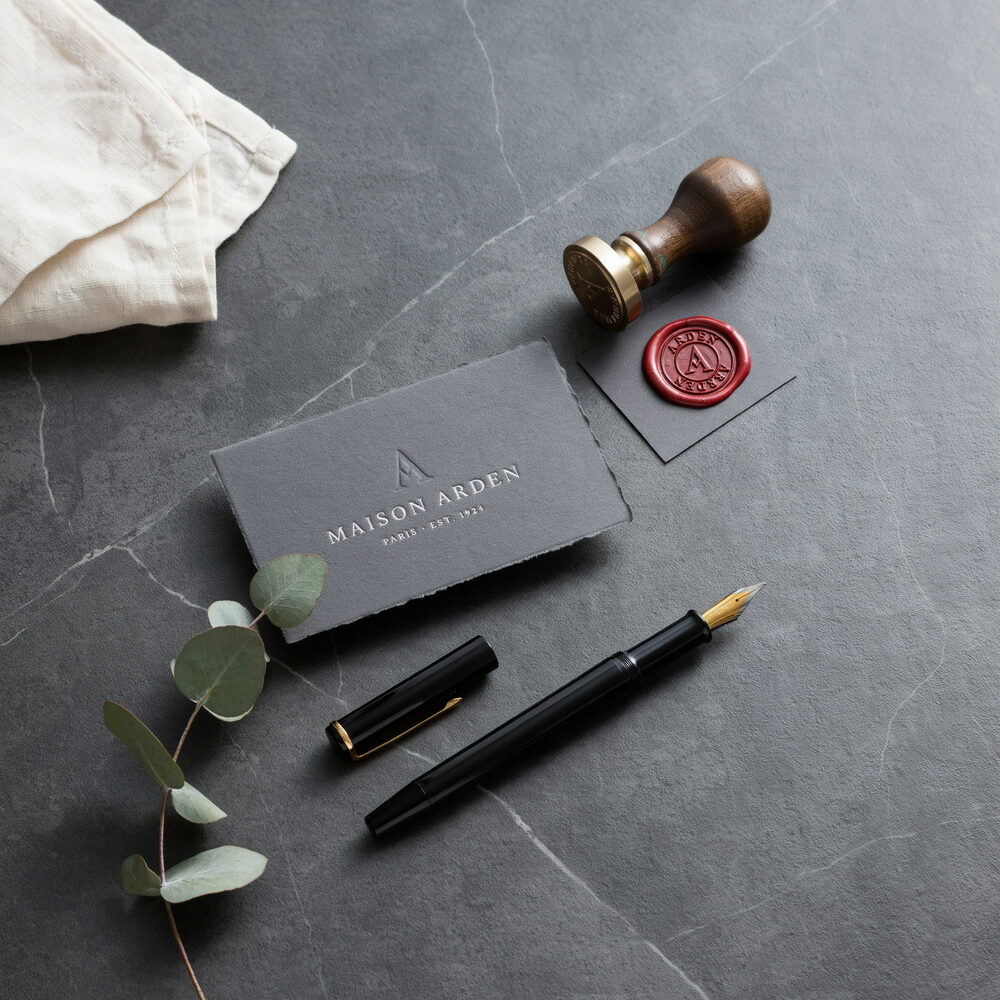
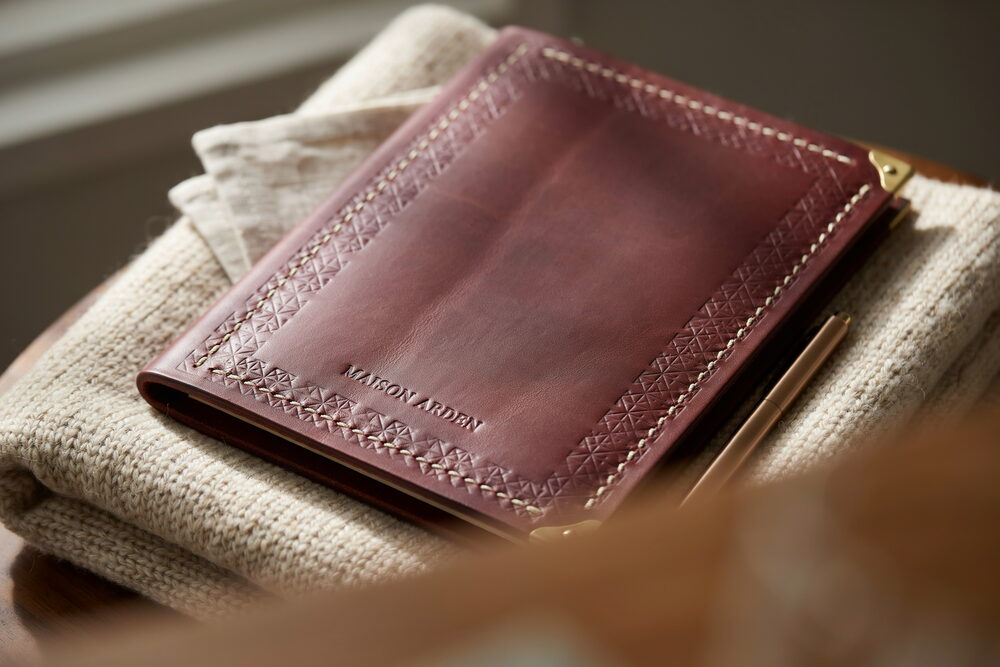
Materials matter more than pixels in this market. A developer selling a AED 40 million penthouse will hand a buyer a printed portfolio before they ever open a website. The paper stock, the embossing, the edge painting, the way a business card feels in the hand. These physical details are part of the brand identity, and they need the same design discipline as the logo. We see too many brands spend heavily on a website and then print on standard 300gsm stock with no finish. The gap is obvious to anyone who has held a well-made piece of print.
Restraint is the hardest skill to teach. The best luxury identities leave space. They do not fill every corner of a page with a pattern or a tagline. They let a single image breathe. They use one accent color instead of three. They say less, and the buyer fills in the rest. That restraint is what separates high-end brand identity design from ordinary branding, and it is the difference buyers feel even when they cannot name it.
Luxury Real Estate Branding: What Buyers Actually Respond To
High-net-worth buyers in Dubai don't respond to superlatives. They've seen "most exclusive" and "unparalleled" on a hundred brochures, and the words stopped meaning anything. What actually moves them is specificity: a brand that names the architect, shows the view from the actual balcony, and explains why the marble was sourced from a particular quarry in Carrara. Specificity reads as confidence, and confidence is what a seven-figure purchase demands.
There's a trade-off here worth being honest about. The more you tailor luxury real estate branding to a narrow buyer profile, the more you exclude everyone else. A campaign built around private beach access and a dedicated yacht berth will not resonate with a family looking for school catchment areas. Most developers try to hedge by keeping the messaging broad enough to appeal to both. That hedging is usually visible, and it dilutes the brand. We'd rather see a developer commit to one buyer and accept that the other will self-select out.
Buyers also respond to restraint. A brand that lets a single rendered image breathe on a page, with a short caption and nothing else, signals that the product doesn't need decoration. Cramming every amenity into one visual tells the buyer the developer is worried the building can't stand on its own. The same applies to language: three precise sentences outperform a paragraph of adjectives.
One thing that consistently works is showing the building in context, not in isolation. A tower floating on a white background looks like a render. The same tower photographed against the actual Dubai Marina skyline, with the traffic on Sheikh Zayed Road visible below, looks like a place someone already lives. Buyers buy the life, not the floor plan. The brand's job is to make that life feel real before the first site visit.
When to Work With a Premium Branding Agency Dubai
Most developers keep a lean internal marketing team, and that works for day-to-day campaigns. A premium branding agency Dubai becomes the right call when the stakes are higher than a refresh: a new launch, a repositioning, or a brand that has to hold its own against international competitors. We see this most often when a project moves from concept to sales gallery, and the identity suddenly has to carry the weight of a nine-figure development.
In-house teams are strong at consistency. They know the portfolio, the approvals process, and the internal politics. What they rarely have is the distance to see which parts of the brand are actually doing the selling. An outside agency brings that distance, plus a wider set of references: hospitality branding from Geneva, residential campaigns from Singapore, retail identities from London. That breadth matters in Dubai, where buyers compare your project to what they saw in Mayfair or Marina Bay, not just to the tower next door.
There are three scenarios where we tell clients to stop trying to do it internally. First, when the brand has to launch fast and the internal team is already stretched across three other projects. Second, when the identity needs to work across print, film, digital, and physical spaces at the same time, which demands a production capability most in-house teams don't carry. Third, when the brand has lost its edge and nobody inside can articulate why. That last one is the hardest to admit, and the most common reason we get called.
Going in-house makes sense for ongoing management: social calendars, email flows, minor asset updates. The expensive mistake is treating a foundational identity project as just another task on the marketing list. A Branding Agency in Dubai · Identity Systems Built to Last · DAO Marketing partner earns its fee in the first six months, when the system it built keeps producing consistent work without constant senior oversight. If your team is spending more time debating the logo than selling the property, that's the signal.
How DAO Marketing Approaches Dubai Brand Identity Projects
We start every dubai brand identity project with a short discovery phase, usually two to three weeks, where we sit with the developer's leadership team and their sales data. The goal is not to collect adjectives. We want to know which units sold fastest, which buyers walked away, and what the sales gallery staff actually say when a client asks why this building is different. That information shapes the strategy more than any moodboard.
From there we move into positioning and naming, then visual identity, then the launch toolkit. For a waterfront residential project in Dubai Marina, that might mean a naming system for the towers, a typographic system that works across Arabic and Latin scripts, a photography direction that avoids the usual drone-shot clichés, and a sales gallery experience that feels closer to a private members' club than a showroom. We build the identity system as a set of rules the developer's own team can use without calling us every week.
Our senior team handles the work directly. We don't hand a property brand to a junior designer after the pitch. That matters because luxury real estate branding fails quietly: a slightly off kerning choice, a beige palette that reads as generic, a tagline that sounds confident in English but flat in Arabic. We catch those details early because the people writing the strategy are the same people approving the final files.
We also connect the identity to performance. A brand that looks expensive but does not convert is a liability. So we test early concepts against real audience segments, refine the messaging before the launch campaign, and hand the developer a measurement framework they can use after we're gone. The identity is not a deliverable. It's a system the sales team uses every day, from the first Instagram post to the final handover meeting.
Common Mistakes That Dilute a Dubai Brand Identity
Most brands don't fail because they lack ambition. They fail because they borrow too much and commit too little. The first mistake we see is copying global luxury codes wholesale. A developer pastes a Milanese serif onto a Dubai tower and calls it heritage. It reads as costume, not conviction. Dubai buyers can spot an imported identity in seconds, and it tells them the brand doesn't understand where it stands.
Inconsistent photography is the second killer. A launch film shot like a perfume ad, then site photos that look like a contractor's WhatsApp feed. That gap erodes trust faster than any competitor can. The fix is boring but effective: one art direction document, one approved colour grade, one set of lens choices. Every frame, from hoarding to brochure, passes through the same visual filter.
Over-designing is just as damaging. Gold foil on everything, three typefaces, a crest nobody asked for. Luxury is restraint. When every surface shouts, nothing feels exclusive. We often remove elements before we add them, because a quieter Build Luxury Brand Identity UAE: A Definitive Guide · DAO Marketing approach leaves room for the product to speak.
There's also the mistake of treating brand identity as a launch event. It's not. It's a discipline that has to survive the first sales quarter, the second tower, the third hire. Brands that treat it as a one-off project drift within a year. The ones that hold the line are the ones buyers remember.
Measuring Whether Your Brand Identity Is Working
We tell clients to watch three signals before they spend another dirham on advertising. Recall comes first. When a buyer mentions your development by name without prompting, or a broker describes your project as "the one with the bronze lobby," the identity is doing its job. Referral quality matters more than referral volume. A strong dubai brand identity brings you buyers who already trust the positioning, so they negotiate less and close faster.
Sales velocity is the bluntest measure. If units move in weeks instead of months, and you're not discounting to get there, the brand is carrying real weight. We also look at the quieter signals: repeat enquiries from the same family offices, media requests that come to you rather than through a PR push, and the tone of comments on your launch content.
None of this needs a dashboard. A simple monthly note on where enquiries came from and how they found you will show whether the identity is pulling or you're pushing. When the pulling starts, you'll feel it in the calendar.
Frequently Asked Questions
What makes a dubai brand identity different from branding elsewhere?
Dubai's market is unusually international, so a brand must signal exclusivity without leaning on one cultural shorthand. Buyers come from dozens of countries, which means the identity has to work across languages and expectations while still feeling rooted in the city's ambition and pace.
How much does luxury branding Dubai cost?
Costs vary widely depending on scope. A focused identity refresh might start in the tens of thousands of dirhams, while a full system with naming, strategy, guidelines, and launch assets runs considerably higher. Most serious property developers treat it as a capital investment, not a line item.
Do property developers really need a brand strategy for property developers?
Yes, especially in a market where buyers compare multiple off-plan projects in the same week. A clear strategy positions the development against specific buyer motivations, which makes every later decision, from sales gallery design to campaign messaging, faster and more consistent.
How long does high-end brand identity design take?
A thorough process usually spans eight to twelve weeks. That includes discovery, strategy, visual exploration, refinement, and delivery of guidelines. Rushed timelines tend to produce identities that look polished but fall apart when applied across signage, print, and digital touchpoints.
Can a premium branding agency Dubai work with an in-house marketing team?
Often, yes. The best arrangements treat the agency as a senior creative partner that sets the strategic and visual foundation, while the in-house team handles day-to-day execution. Clear documentation and a shared approval process keep the work coherent over time.